

Imagine you are a farmer who wants to grow your business and reach new customers. You have heard that social media is a powerful tool for marketing and communication, but you are not sure how to use it effectively.
How do you know which platforms to choose, what content to create, and how to measure your results?
You are not alone. Many farmers are using social media to promote their products, share their stories, and connect with their communities.
According to a study by Successful Farming, 70% of farmers are online daily, and 51% of them use YouTube, followed by Facebook, Pinterest, and Twitter.
However, not all farmers are clear about how to evaluate their social media efforts and calculate their return on investment (ROI).
What is social media ROI and why does it matter for farmers?
Social media ROI is the ratio of the benefits you gain from your social media activities to the costs you incur for them. It shows you how much value you are creating for your business with your social media efforts.
Benefits can include increased sales, leads, brand awareness, customer loyalty, and satisfaction. Costs can include time, money, resources, and tools spent on creating and managing your social media presence.
Social media ROI matters because it helps you determine if your social media strategy is working. It also helps you identify what is working well and what needs improvement.
By measuring your social media ROI, you can optimize your social media campaigns, allocate your budget more efficiently, and justify your spending to yourself and others.
How to measure social media ROI?
There is no one-size-fits-all formula for measuring social media ROI for farmers. Different farmers may have different goals, metrics, and methods for calculating their social media ROI. However, there are some common steps that you can follow to measure your social media ROI effectively:
1. Define your social media goals
What are you trying to achieve with your social media activities? Are you looking to increase sales, build brand awareness, or establish yourself as an industry expert?
Here are some examples:
- Increase your online sales by 10% in the next quarter
- Generate 500 leads in the next month
- Grow your Instagram followers by 20% in the next year
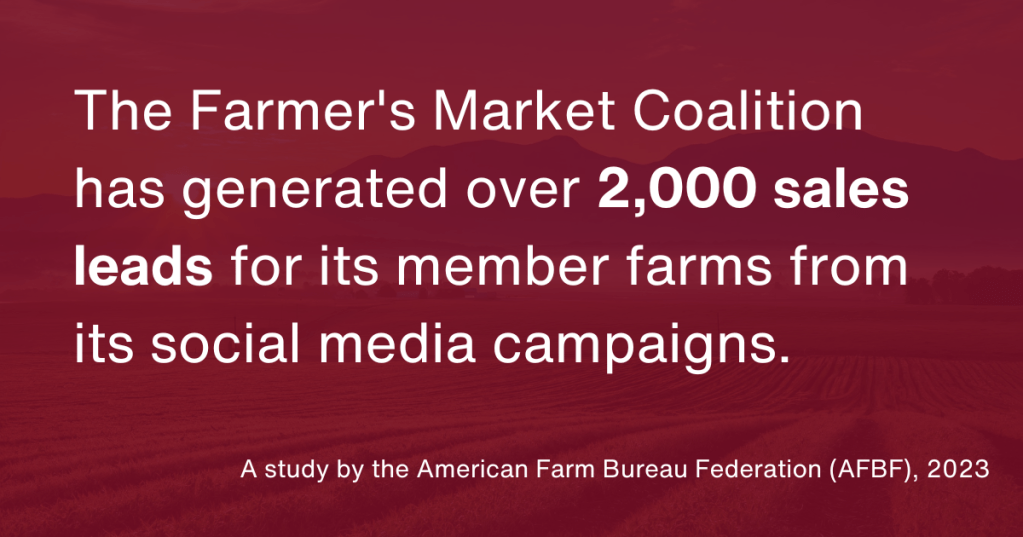
A study by the American Farm Bureau Federation (AFBF), 2023
2. Choose your key performance indicators (KPIs)
What are the metrics that indicate your progress and success towards your goals?
Your KPIs should be aligned with your goals and reflect the benefits you are seeking from your social media efforts.
Here are some important KPIs to consider in Social Media:
- Fan Growth: Tracking the number of followers or fans acquired over time indicates the overall reach and engagement of your social media presence.
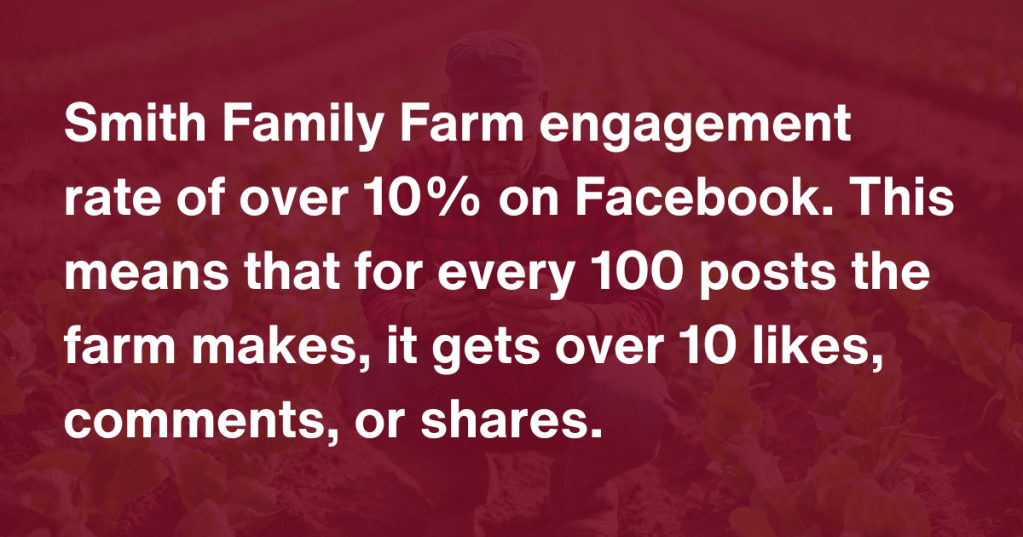
- Engagement Rate: Measuring the level of interaction with your posts, such as likes, comments, and shares, provides insights into how your content resonates with your audience.
- Click-through Rates (CTRs): Analyzing the number of clicks on links embedded in your posts reveals the effectiveness of your content in driving traffic to your website or landing pages.
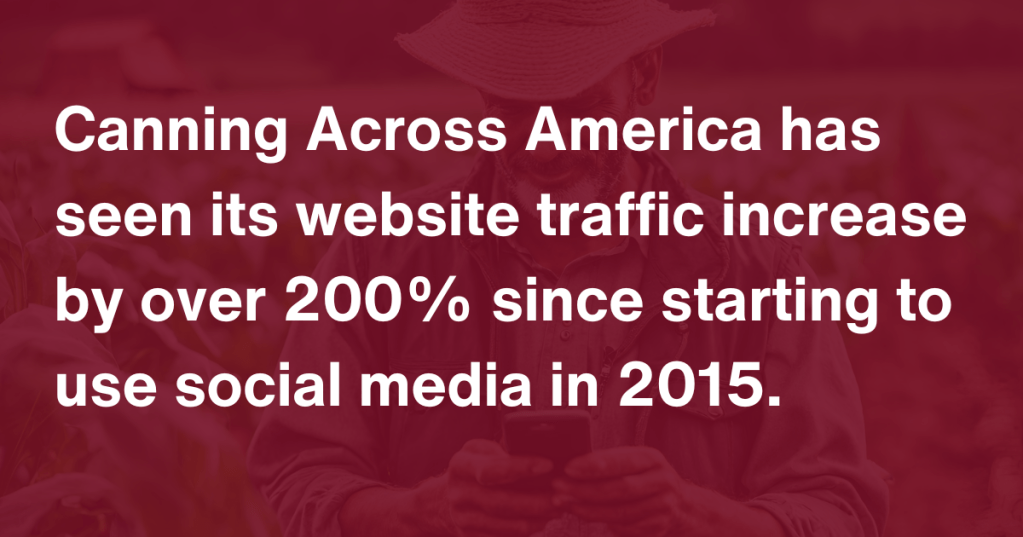
- Website Traffic: Tracking the number of visitors to your website originating from social media posts indicates the impact of your social media campaigns on driving online traffic.
- Sales Leads: Measuring the number of qualified leads generated through social media interactions provides tangible evidence of the platform’s ability to generate business opportunities.
- Customer Satisfaction: Monitoring customer feedback and interactions through social media channels reveals the impact of your social media presence on brand perception and customer relationships.
3. Track and collect your data
How will you measure and record your KPIs? You will need to use tools and methods that can help you collect and analyze your data accurately and consistently.
You can use built-in analytics features on social media platforms, such as Facebook Insights, Instagram Insights, or YouTube Analytics.
You can also use third-party tools, such as Google Analytics, Sprout Social, or Tagger by Sprout Social, to track and report your data across multiple platforms and sources.
4. Calculate your costs
How much are you spending on your social media activities? You will need to account for all the costs associated with your social media efforts, such as time, money, resources, and tools.
You can use tools such as time trackers, spreadsheets, or invoices to track and record your costs. You can also assign a monetary value to your time and resources based on your hourly rate, market value, or opportunity cost.
5. Calculate your ROI
How do you compare your benefits and costs to get your ROI?
You can use a simple formula to calculate your social media ROI: (Benefits – Costs) / Costs x 100%. This will give you a percentage that represents your social media ROI.

For example, if you generated $10,000 in online sales from your social media campaigns and spent $2,000 on your social media activities, your social media ROI would be ($10,000 – $2,000) / $2,000 x 100% = 400%.
This means that for every dollar you spent on your social media efforts, you earned four dollars in return.
In this ever-evolving digital age, remember that each like, share, and click is a step closer to a flourishing harvest.
Armed with the right metrics and insights, you’re well on your way to reaping the rewards of a well-crafted social media strategy.





 DigiBerry
Leave a reply to Creating Engaging Content to Showcase Your Farm Online – Rooted Leads Cancel reply