

Imagine you are a farmer who sells fresh produce at a local market. You have a loyal customer base who loves your products and supports your business. One day, you receive a message on your Facebook page from a new customer who bought some tomatoes from you.
They say they are very disappointed with the quality of the tomatoes and they want a refund. How would you handle this situation?
If you are like most farmers, you might not have a lot of experience with social media customer service. You might feel tempted to ignore the message, delete it, or reply with a defensive or angry tone.
However, none of these options will help you retain or attract customers. In fact, they might damage your reputation and hurt your sales.
Social media customer service is a powerful way to communicate with your customers, address their issues, and build trust and loyalty.
According to a report by Sprout Social, 76% of consumers notice and appreciate when businesses prioritize customer support on social media.

Let’s explore some tips and best practices on how to use social media for customer service as a farmer.
Why social media customer service matters for farmers
Customer service is an essential part of any business, but it is especially important for farmers who sell directly to consumers. Social media customer service can help you:
Increase customer satisfaction and retention
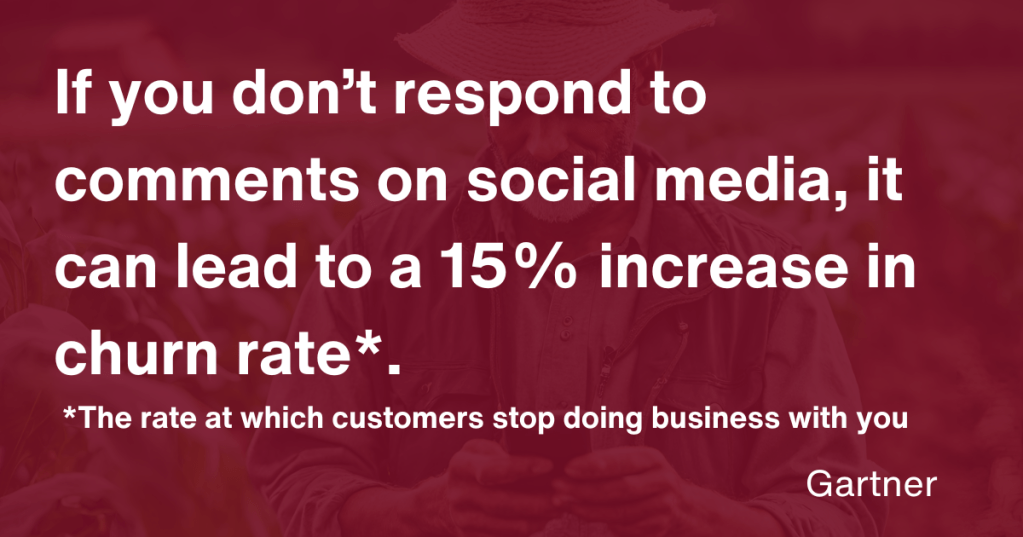
By responding to customer questions and concerns on social media, you can show that you care about your customers and their feedback. This can improve customer satisfaction and loyalty, and reduce churn rate.
Build trust and credibility
By providing transparent and honest information about your products and practices on social media, you can demonstrate your expertise and quality. This can build trust and credibility among your customers, and differentiate them from competitors.
Generate positive word-of-mouth and referrals
By delivering exceptional customer service on social media, you can create positive experiences and impressions for your customers. This can encourage them to share their feedback and recommendations with their friends and family, and increase brand awareness and reputation.
How to use social media for customer service
1. Answering customer inquiries
As a farmer, you can use social media to answer common questions about your products, availability, prices, delivery, etc. You can also use social media to educate your customers about your farming methods, values, and benefits.
For example, Smart Greens, a vertical farming company, uses Instagram to answer customer questions and share information about their products and processes.
2. Resolving customer issues
Social media can also be used to address customer complaints and problems, such as product quality, shipment delays, service outages, etc.
You can also use social media to apologize and offer solutions, such as refunds, replacements, discounts, etc.
For example, Bright Agrotech, a hydroponic farming company, uses Facebook to respond to customer issues and provide solutions.
3. Soliciting customer feedback
Farmers can use social media to ask for customer feedback and suggestions, such as product preferences, satisfaction levels, improvement areas, etc.
You can also use social media to thank your customers for their feedback and show how they use it to improve your products and services.
For example, BySpire, a microgreen farming company, uses Instagram to ask for customer feedback and show how they implement it.
Tips for responding to social media feedback
To provide effective social media customer service, you need to respond promptly and professionally to social media feedback. Here are some tips to do so:
1. Be active and consistent
One of the most important factors for a successful social media presence is timely and consistent activity. Customers expect fast and frequent responses from brands on social media.
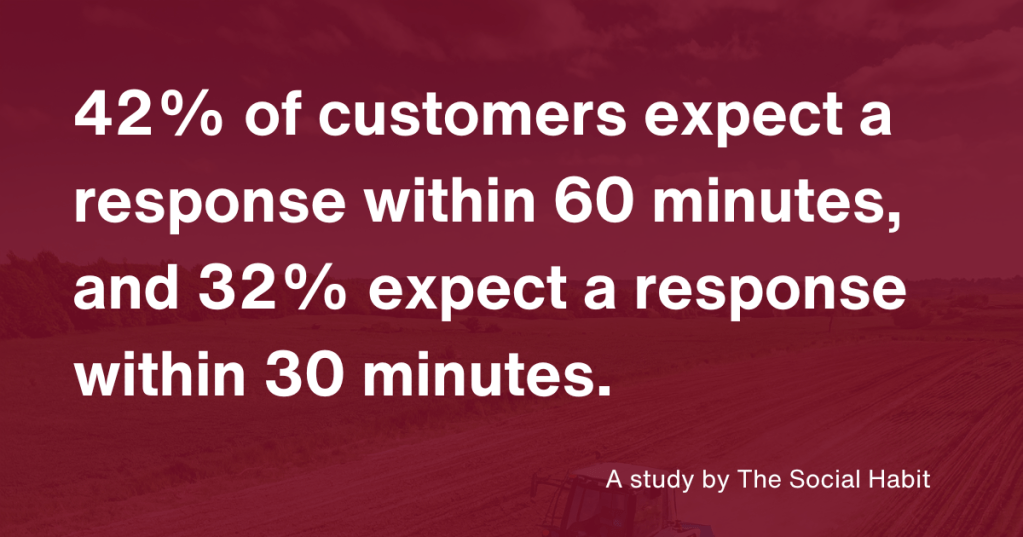
To meet these expectations, as a farmer, you need to monitor your social media channels regularly and respond to customer feedback as soon as possible.
You can also use tools like Sprout Social or Hootsuite to schedule the posts and manage interactions across multiple platforms.
2. Be respectful and helpful
Customers appreciate when brands are respectful and helpful on social media. Farmers need to be polite and courteous when responding to customer feedback, even if it is negative or critical. You need to acknowledge the customer’s issue, apologize for any inconvenience, and offer a solution or assistance.
You also need to avoid being defensive, argumentative, or sarcastic, as this can damage your reputation and relationship with your customers. You can also use emojis and GIFs to add some personality and emotion to your responses.
3. Be transparent and honest
Customers value when brands are transparent and honest on social media. Farmers need to be clear and accurate when providing information about their products and services, and avoid making false or misleading claims.
You also need to admit your mistakes and take responsibility for your actions, and avoid blaming others or making excuses. You can also use social media to share your stories and values and show your customers how you grow your products and what makes them unique and trustworthy.
Here are some examples of how to respond professionally and politely to negative feedback on social media:
Example 1: A customer complains about the quality of your tomatoes on your Facebook page
Response: Hi [customer name], thank you for your feedback and we are sorry to hear that you were disappointed with the quality of our tomatoes. We take pride in our products and we always strive to deliver the best quality and freshness to our customers. We apologize for any inconvenience this may have caused you. Could you please send us a photo of the tomatoes you bought and your receipt to our email address [email address]? We would like to investigate what went wrong and offer you a refund or a replacement. Thank you for your understanding and cooperation.
Example 2: A customer gives you a one-star rating on Google Reviews
Response: Hi [customer name], thank you for taking the time to share your experience with us. We are sorry to see that you gave us a one-star rating. We value your feedback and we would like to know what we can do to improve your satisfaction. Could you please tell us what you did not like about our products or service? We hope to hear from you soon and make things right for you.
Example 3: A customer tags you in a tweet saying they found a worm in your lettuce
Response: Hi [customer name], we are very sorry to see that you found a worm in our lettuce. This is unacceptable and we apologize for this unpleasant surprise. We grow our lettuce organically and we inspect them carefully before packaging and shipping them. However, sometimes a worm might escape our notice and end up in your salad. We are working hard to improve our quality control and prevent this from happening again. Please DM us your order number and we will send you a coupon for a free lettuce or any other product of your choice. Thank you for your patience and support.
Social media customer service is a great opportunity for farmers to connect with customers and provide excellent customer service.
By using social media to answer customer inquiries, resolve customer issues, and solicit customer feedback, you can increase customer satisfaction and retention, build trust and credibility, and generate positive word-of-mouth and referrals.
To provide effective social media customer service, you need to respond promptly and professionally to social media feedback and be active, consistent, respectful, helpful, transparent, and honest.




 DigiBerry
Leave a reply to A Farmer’s Social Posting Strategy to Build Community and Connections – Digiberry Cancel reply